
Case study
Next Gig
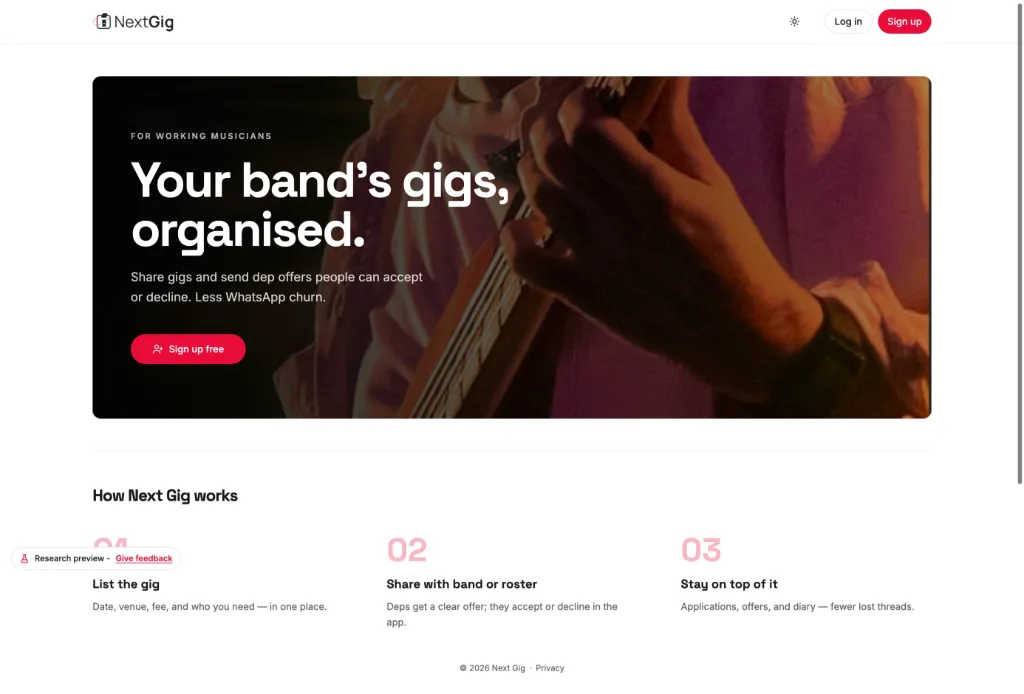
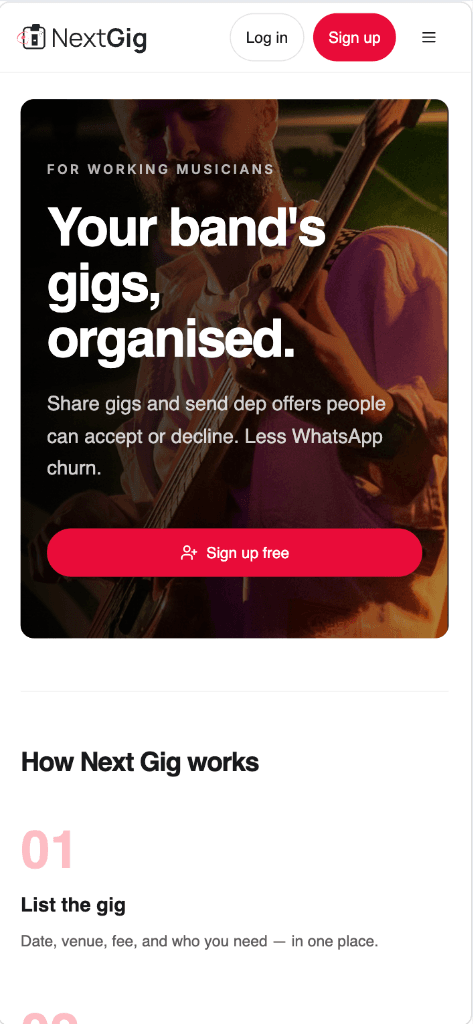
Designing and building a mobile-first coordination platform for working UK musicians — replacing group-chat chaos with transaction clarity.
At a glance
- Role
- Solo builder — product design, UX & full-stack development
- Timeline
- 2025 – present
- Stack
- React · TypeScript · Tailwind · Firebase
- Status
- Live PWA in active pilot with working gigging musicians across Scotland
Key Highlights
- End-to-end execution — problem discovery, UX architecture, visual design, and shipping live production code
- Field testing & iteration — rapid feedback loops with real gigging musicians shaping critical mobile interactions
- System craft — high-density mobile patterns, reusable split-header sheets, and booking state machines
01 Overview
As an active gigging bass player and a product designer, I built Next Gig to solve a problem I deal with every weekend: the chaotic logistics of live music.
Freelance musicians juggle multiple bands, last-minute dep (substitute) requests, load-in timings, and freelance tax accounting. Almost all of this coordination happens in fragmented WhatsApp groups, SMS threads, and notes apps. The result is missed details, awkward double-bookings, and end-of-year tax stress.
I designed and built Next Gig from scratch as a dedicated, calm operating system for musicians. It replaces messy group chats with a structured booking lifecycle, automated roster cascades, and a private earnings ledger.
02 The Problem
The friction of coordinating live gigs in group chats
When a band member can't make a gig, the band leader has to find a dep fast. Today, that means messaging five bass players or drummers simultaneously in WhatsApp.
This ad-hoc system creates three real-world headaches:
- Phone tag & Dep Churn: Band leaders spend hours following up individually across scattered chats, playing phone tag while gig dates creep closer.
- Ambiguous Confirmations: Messages like “I might be free, let me check” frequently get mistaken for confirmations, leading to awkward double-bookings or empty stage slots.
- Scattered Finances & Tax Nightmares: Fees, venue addresses, and mileage deductions end up buried in message histories, turning self-assessment tax season into a manual receipt hunt.
03 The Solution
A calm, transaction-based workspace for live musicians
Next Gig structures communication around explicit booking states. Instead of open-ended messaging, gigs move through clear actions:
- For Band Leaders: A clean dashboard to track lineup coverage, input gig parameters (fees, times, setlists), and send automated offers to saved dep rosters.
- For Deps: A mobile-first card with everything needed upfront (date, fee, venue, soundcheck time) with single-tap accept or decline.
- For Bands: A shared calendar with proactive conflict detection so members never double-book.
- For Freelancers: An automatic earnings ledger that aggregates gig income, travel mileage, and expenses into a UK tax-year summary with CSV export.
04 UX Audit & Iteration
Real-world usability testing on the road
I tested early builds directly with gigging musicians and band leaders in Scotland. Watching peers interact with the app in real conditions (often backstage, in low light, or on the move) surfaced three critical UX improvements:
Dep Fee Placement
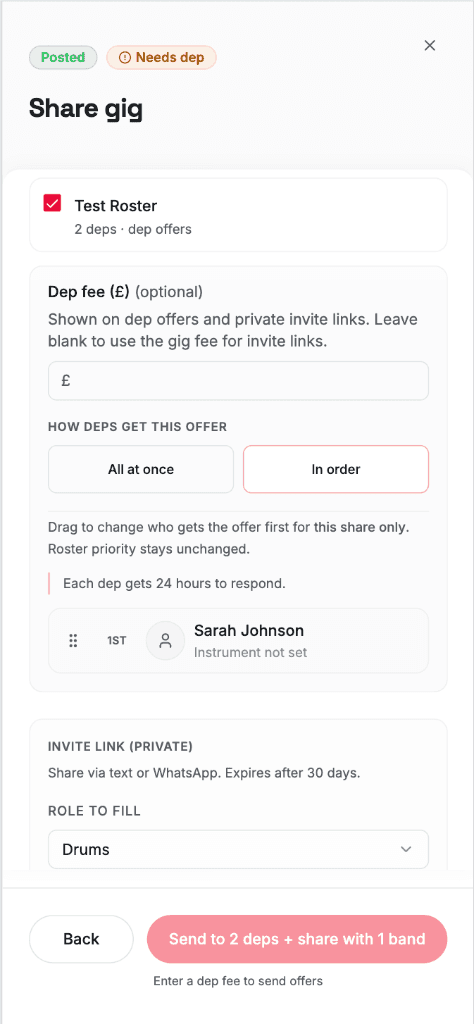
Originally buried at the bottom of the Share sheet. Band leaders had to scroll past roster selection to set pay. Moving the fee immediately alongside roster selection made gig creation effortless on one hand.
Single-Tap Quick Actions
Deps had to tap into the full detail view to accept or decline. Surfacing swipeable/one-tap action chips directly on list cards reduced response time to seconds while on the move.
Proactive Conflict Alerts
Conflict warnings previously required opening an individual offer. Adding proactive schedule collision badges on the top-level list prevented accidental double-booking before opening the offer.
Visual Evolution: Gig Detail & Lineup
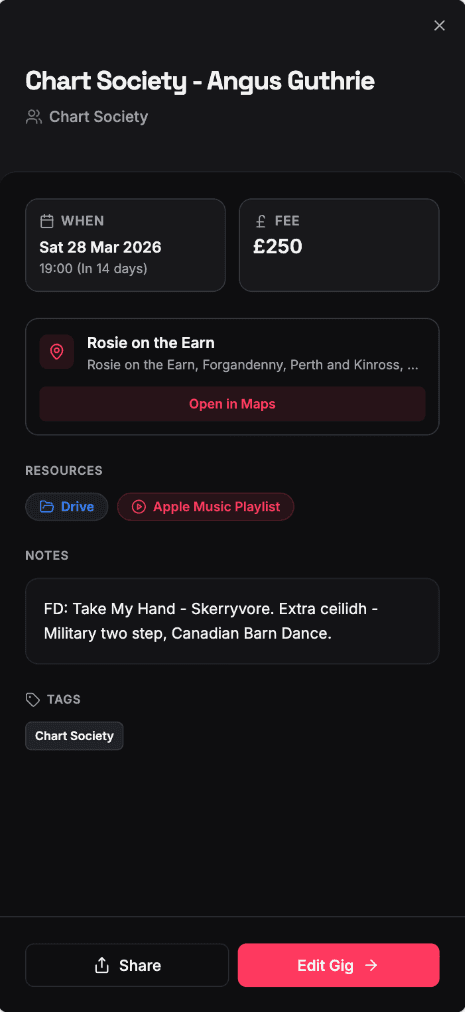
Flat list format showing basic time and fee fields without clear lineup or coverage status.
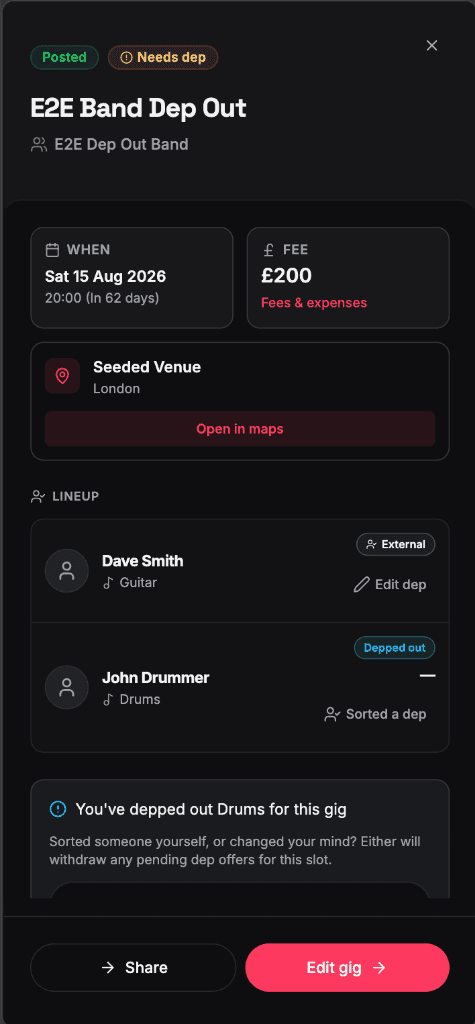
High-contrast layout surfacing active status badges, instrument slots, and real-time coverage notifications.
05 Core Features
Built for the realities of working musicians
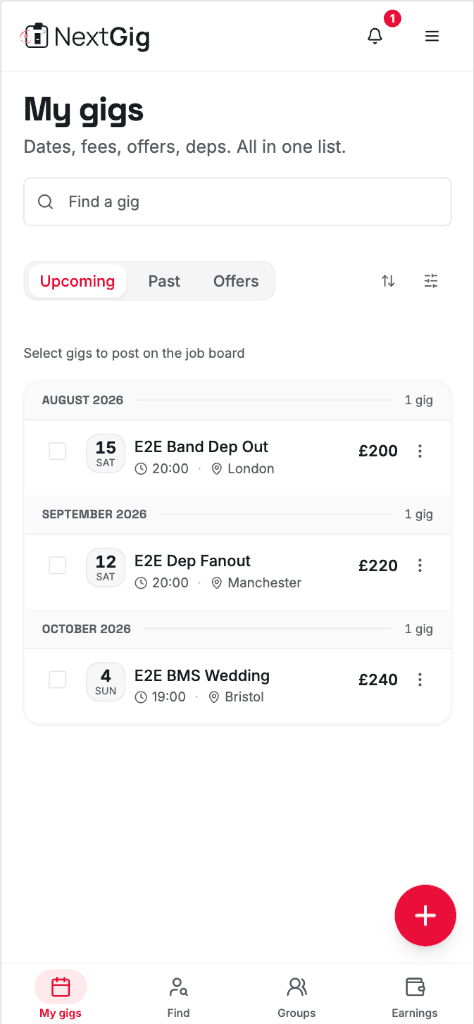
1. My Gigs Dashboard
A central schedule compiling upcoming dates, confirmed gigs, pending invitations, and lineup statuses into a clean, scannable feed.
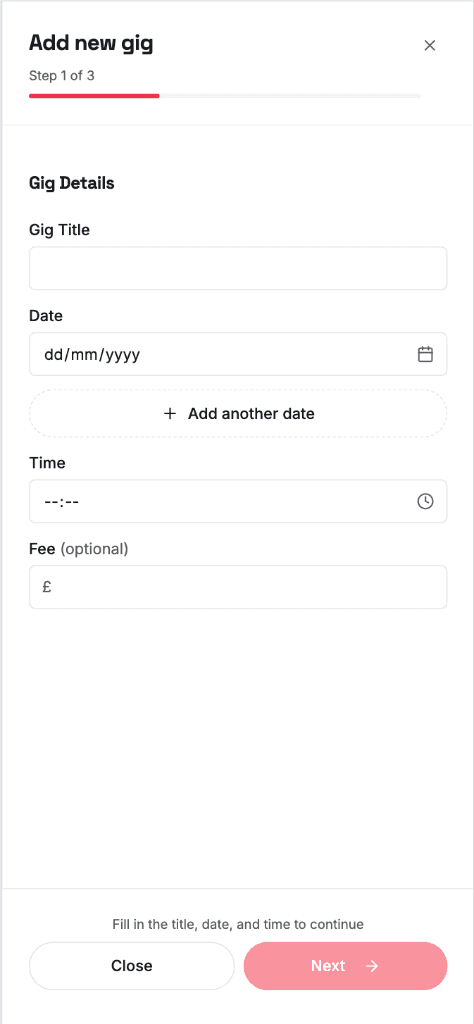
2. Fast Gig Creation
Band leaders can set up a gig in seconds with venue address, schedule (load-in, soundcheck, set times), fee structure, and instrument requirements.
3. Smart Dep Cascades
Offers can be dispatched to an ordered roster. When player 1 declines or times out, the gig automatically routes to player 2, removing the stress of manual chasing.
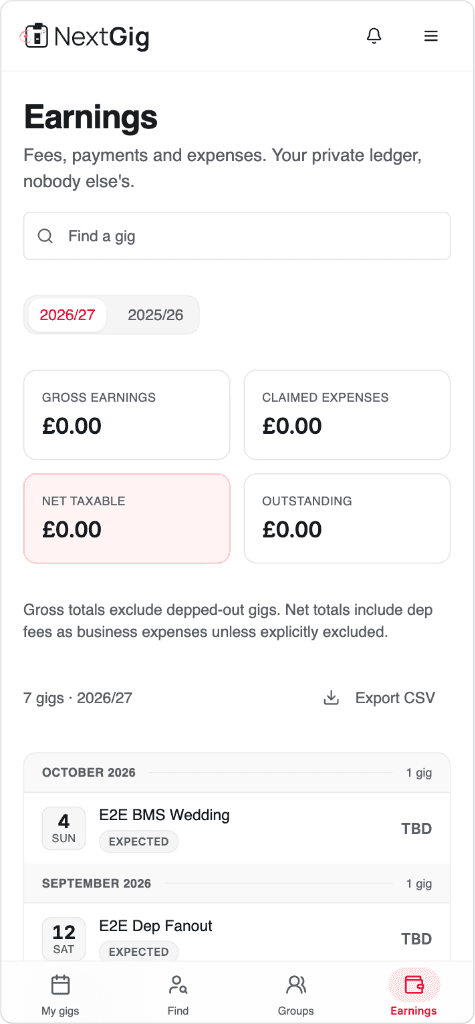
4. Musician Earnings & Tax Ledger
Automatically logs performance fees, travel mileage, and expenses. Gigs roll up into a UK tax-year summary with clean CSV export ready for HMRC self-assessment.
06 Design System & Craft
High-contrast patterns built for dark venues
Designing for musicians means considering real usage environments: dimly lit green rooms, noisy soundchecks, and one-handed thumb interaction.
- Split-Header Sheets: Key gig parameters (date, time, fee) stay pinned in a high-contrast sticky header while details scroll below.
- Semantic Coverage Badges: At-a-glance status indicators (Covered, Pending, Offered) provide immediate visual feedback.
- Smooth Micro-Interactions: Subtle physics-based spring transitions give the mobile web app a native feel.
07 Outcomes & What's Next
From problem to live pilot in production
Next Gig is live at nextgigapp.com (opens in new tab) as an installable progressive web app.
Key milestones achieved:
- Pilot Usage: Active musicians in the Scottish music scene are using the app to manage gigs and dep rosters.
- End-to-End Execution: Designed in Figma, built with React, TypeScript, Tailwind, and Firebase, and deployed with automated CI/CD.
- Living Lab: Serves as an ongoing testbed for AI-assisted design-to-code workflows and high-density mobile patterns.